Tuesday, August 18, 2015

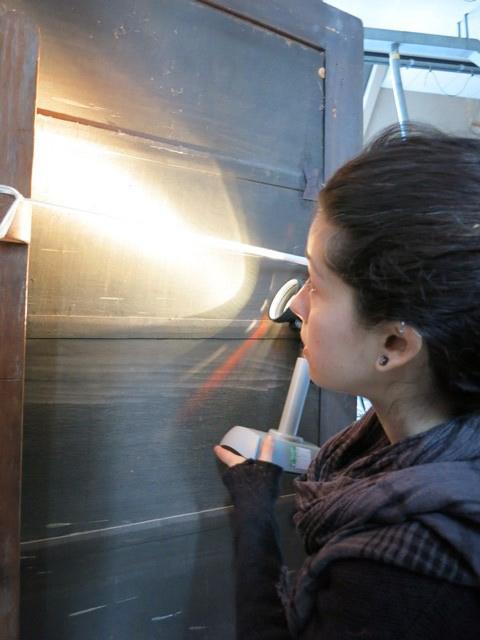
Great Read on Getty Museum's Blog "The Iris" -Looking at a Painting as a Conservator

Fascinating Article - Looking at a Painting as a Conservator via

Labels: , , , ,

Thursday, April 23, 2015

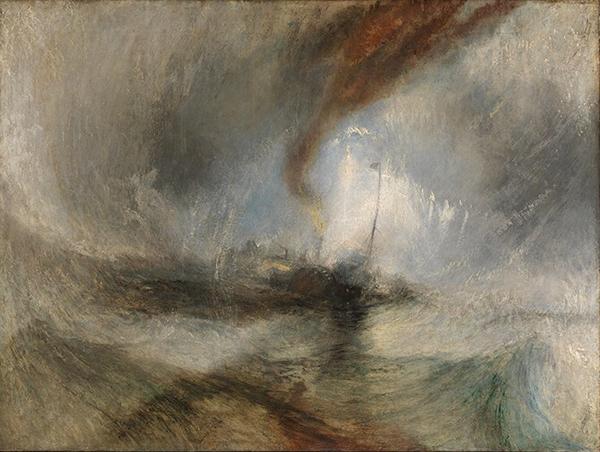
Wishing JMW Turner a Splendid Birthday

Monday, August 12, 2013

Introducing the Getty Museum's Open Content Program

by Gregg Chadwick

Unknown maker, French (photographer) , Polyorama Panoptique Lorchette Enchantée, French, about 1855, Lithograph, colored, Image: 8.3 x 16.5 cm (3 1/4 x 6 1/2 in.)
Digital image courtesy of the Getty's Open Content Program


The Getty Museum in Los Angeles is making available, without charge, all available digital images to which the Getty holds rights or that are in the public domain. These images may  be used for any purpose. No permission is required. As an artist I am excited to delve into the Getty's rich collection in search of inspiration. In our litigious and money conscious world, it is refreshing that the Getty Museum and the Rijksmuseum in Amsterdam are putting creativity and scholarship above image control and profit.

Download free images of artworks in the Getty Museum's collection at Open Content Images. 

"Why open content? Why now? The Getty was founded on the conviction that understanding art makes the world a better place, and sharing our digital resources is the natural extension of that belief. This move is also an educational imperative. Artists, students, teachers, writers, and countless others rely on artwork images to learn, tell stories, exchange ideas, and feed their own creativity. In its discussion of open content, the most recent Horizon Report, Museum Edition stated that 'it is now the mark—and social responsibility—of world-class institutions to develop and share free cultural and educational resources.' I agree wholeheartedly." 
- Getty CEO James Cuno in The Getty Iris 


Info from the Getty Museum on Open Content:


Why Open Content?

The Getty adopted the Open Content Program because we recognized the need to share images of works of art in an unrestricted manner, freely, so that all those who create or appreciate art—scholars, artists, art lovers, and entrepreneurs—will have greater access to high-quality digital images for their studies and projects. Art inspires us, and imagination and creativity lead to artistic expressions that expand knowledge and understanding. The Getty sincerely hopes that people will use the open content images for a wide range of activities and that they will share the fruits of their labors with others.
Access to Open Content Images

Initially, the images available through the Open Content Program are of works in the J. Paul Getty Museum's collections. Over time, images from the Getty Research Institute and the Getty Conservation Institute will be added. Museum images can be found on the Museum's Collection webpages or on the Getty Search Gateway. Those available as open content images are identified with a "Download" link. Images provided are JPEG files at a minimum of 300 DPI. See the Guidelines for Successful Printing (PDF) for more information on file format

If you need new photography, resizing, or color correction, you can request those services by Contacting Museum Rights & Reproductions. A fee (PDF)will be charged for this service.
Public Domain and Rights

Open content images are digital surrogates of works of art that are in the Getty's collections and in the public domain, for which we hold all rights, or for which we are not aware of any rights restrictions. Rights restrictions are based on copyright, trademark, privacy and publicity laws, and contractual obligations. If an image you want is not designated as an open content image, it is because one or more of the above identified legal rights restricts our ability to make that content available under this program. While the Getty reviews the metadata about each picture before making it available as an open content image, there may be some underlying rights that were unknown to us. For that reason, we strongly recommend that users consider the possibility that rights of third parties may be involved, and permission for those rights may need to be obtained by the user for the proposed use.
Fair Use

Open content images can be used for any purpose without first seeking permission from the Getty. Images of many other works in the collections are also on our website in varying formats. The Getty supports fair use of images when the applicable legal criteria are met. For more information on use of digital images of works in the Getty's collections, please refer to the Getty'sTerms of Use.
Hippolyte Bayard (photographer) [French, 1801 - 1887]
Arrangement of Specimens
27.7 x 21.6 cm (10 15/16 x 8 1/2 in.) Cyanotype [Direct Negative]  about 1842
Digital image courtesy of the Getty's Open Content Program

Attribution to the Getty

Please use the following source credit when reproducing an image:
Digital image courtesy of the Getty's Open Content Program.
When using open content images, you should not suggest or imply that the Getty endorses, approves of, or participated in your projects.
Publications Using Open Content Images

While there are no restrictions or conditions on the use of open content images, the Getty would appreciate a gratis copy of any scholarly publications in which the images are reproduced in order to maintain the collection bibliography. Copies may be sent to the attention of:
Open Content Program
Registrar's Office
The J. Paul Getty Museum
1200 Getty Center Drive, Suite 1000
Los Angeles, CA 90049
Frequently Asked Questions

Get answers to frequently asked questions about the Getty's Open Content Program.
Learn more about our Open Content Program: http://bit.ly/19e5I5r 

Love art? Follow the Getty on Google+ to stay in touch:http://bit.ly/gettygoogleplus


Banner image, clockwise from left: Irises (detail), 1889, Vincent van Gogh. Oil on canvas, 28 x 36 5/8 in. The J. Paul Getty Museum, 90.PA.20; Mixing Vessel with Apollo and Artemis(detail), about 415–400 B.C., attributed to the Palermo Painter. Greek, made in Lucania, South Italy. Terracotta, 22 1/16 x 13 3/8 in. The J. Paul Getty Museum, 85.AE.101;Decorated Initial O (detail) in the Stammheim Missal, about 1170s, unknown illuminator. German, made in Hildesheim. Tempera colors, gold leaf, and silver leaf on parchment, 11 1/8 x 7 7/16 in. The J. Paul Getty Museum, Ms. 64, fol. 154v (97.MG.21.fol. 154v)

Labels: , , , , ,

Friday, March 29, 2013

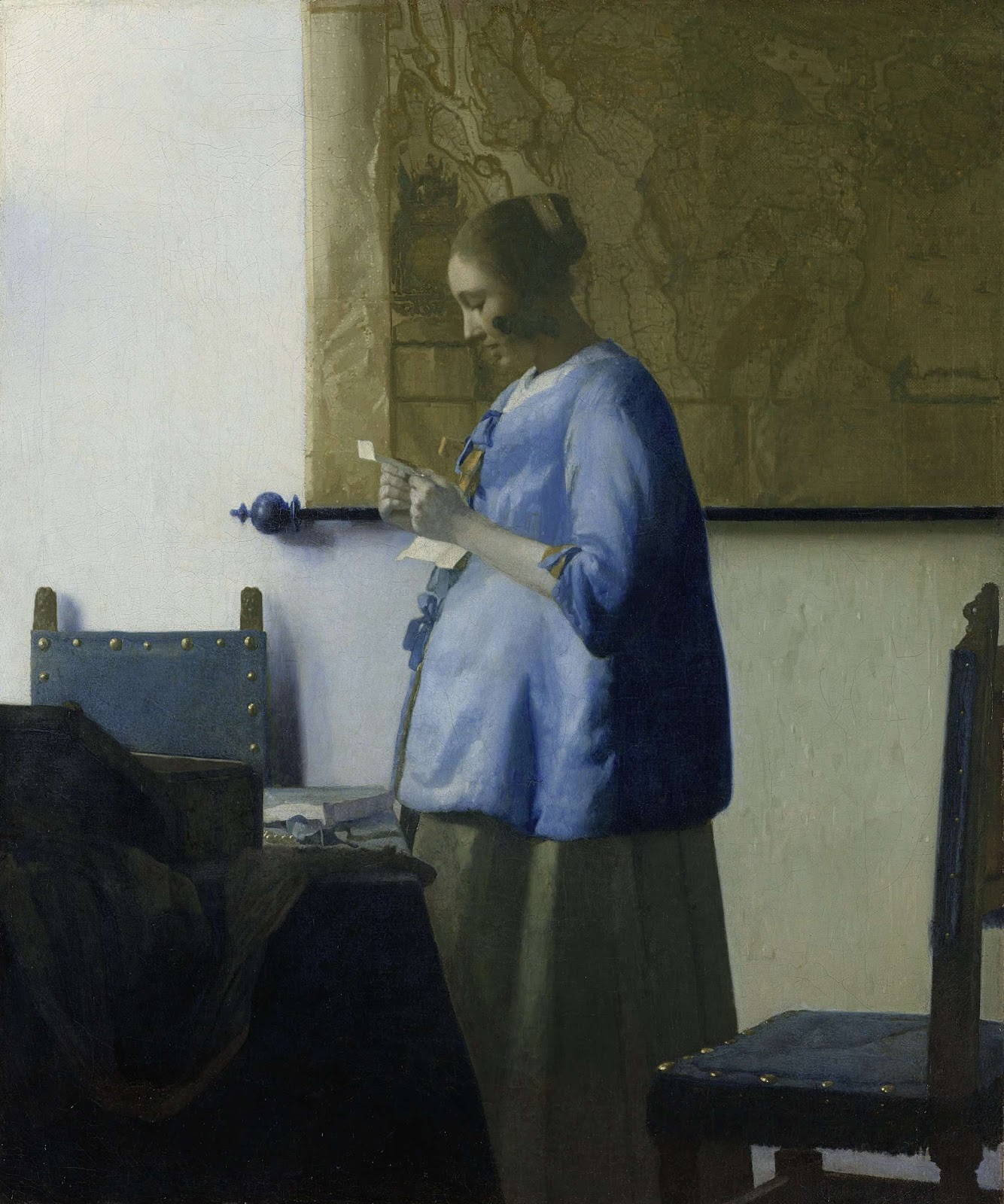
Thoughts On Vermeer's "Woman In Blue Reading A Letter" on Loan at the Getty Museum

Johannes Vermeer
Woman In Blue Reading A Letter
(Brieflezende vrouw)

18 5/16" x 15 3/8" oil on canvas 1663-64
Rijksmuseum, Amsterdam.
On loan from the City of Amsterdam (A. van der Hoop Bequest)

 "It seems appropriate that a gesture so paradigmatic of Vermeer's art, should appear concerned with the weighing and balancing of light itself."

Currently on view at the Getty Museum in Los Angeles, is Vermeer's haunting painting Woman In Blue Reading A Letter. On loan from the Rijksmuseum in Amsterdam, the Getty is the artwork's last stop on a world tour before returning to the Netherlands for the reopening of the Rijksmuseum on April 13, 2013. The painting is on view at the Getty through Sunday, March 31, 2013.

The Getty has thoughtfully installed Woman in Blue Reading a Letter amidst paintings by Vermeer's Dutch contemporaries. On a recent visit to see the work at the Getty with my friend, art conservator René Boitelle, we both were struck by how modern Vermeer's painting looks in a room full of other 17th century paintings. Both the cinematic quality of Vermeer's art and the painting's rich harmonies in blue seem to carry the work forward into our time. Also, the mystery of the image gives space for the viewer to enter into the scene and to create a sort of pictorial meaning out of the clues presented. 

This is what we appear to see:

It is morning. A woman fresh from bed, she still wears her nightcoat, stands before a window quietly reading a letter. It is a cool, wintery Northern light. The light from the window provides only a hint of warmth in a scene limned by blues. The woman's flesh is grayed with transparent glazes of lapis lazuli, as is the wall behind her. Reds seem to have been banished from the composition. Did Vermeer plan to add layers of color to this scene or did he intend to leave an image in blues?

On the wall in this blue room is a map quite similar to one printed by the Dutch artist and mapmaker Claes Jansz. Visscher in 1652. The map depicts Holland in the 17th century and brings to mind thoughts of seafaring and trade - major Dutch commercial activities then and now.  

Claes Jansz. Visscher
Map of Holland
Third State published by his grand-son Nicolaas II

Just as twitter, text messaging, and e-mail now dominate written communication, in the 17th century the personal letter became the preferred means of transmitting thoughts and ideas to close acquaintances, friends, family, and lovers. Of course official and legal correspondence had long been in use, but the discussion of private thoughts, feelings, and desires in epistolary form came into fashion during the 1600's along with a rise in middle class wealth and literacy in the Netherlands. I can't help but wonder who the letter is from. Is the map a clue? Is the letter from an absent husband? Lover? Did she receive it recently? Or did she pull it like a treasure from the open box on the abstracted table in the foreground? She reads with rapt attention. Perhaps this is her morning ritual - to each day reread the words her love left for her to cherish until his homecoming. Vermeer, amazingly allows us to witness her private moment of strength and serenity.


Johannes Vermeer
Woman In Blue Reading A Letter (detail)
(Brieflezende vrouw)
18 5/16" x 15 3/8" oil on canvas 1663-64 
Rijksmuseum, Amsterdam.
On loan from the City of Amsterdam (A. van der Hoop Bequest) 

More At:

Labels: , , , , , , ,

FAIR USE NOTICE:: This site contains images and excerpts made available for the purpose of analysis and critique, as well as to advance the understanding of artistic, political, media and cultural issues. The 'fair use' of such material is provided for under U.S. Copyright Law. In accordance with U.S. Code Title 17, Section 107, material on this site (along with credit links and attributions to original sources) is viewable for educational and intellectual purposes. If you are interested in using any copyrighted material from this site for any reason that goes beyond 'fair use,' you must first obtain permission from the copyright owner.