Saturday, September 23, 2017

New Biography of Leonardo da Vinci by Walter Isaacson


“Walter Isaacson is at once a true scholar and a spellbinding writer. And what a wealth of lessons are to be learned in these pages.” —David McCullough, two-time winner of the Pulitzer Prize

Walter Isaacson, author of a new biography of Leonardo da Vinci, discusses the Renaissance genius' wildly eclectic notebooks that contained everything from landscape sketches to math equations to 'to do' lists. For more about Leonardo da Vinci by Walter Isaacson http://ow.ly/cHwn30d8Yrg

Also by Walter Isaacson
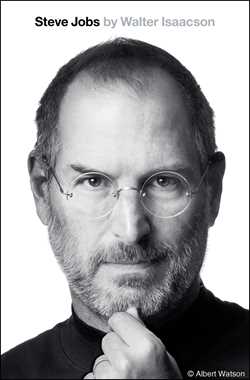
Steve Jobs
 
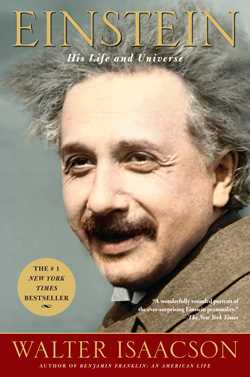
Einstein
 
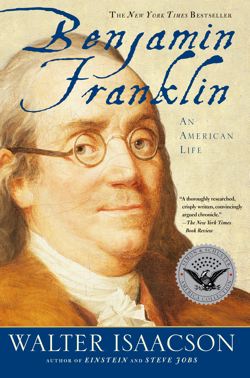
Benjamin Franklin
 
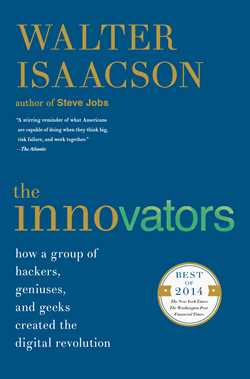
The Innovators

Labels: , , , , , , , , , ,

Sunday, April 12, 2015

Fragonard's Transformation of "Young Girl Reading"

And now for the big reveal . . . introducing Fragonard’s “Portrait of a Woman with a Book” (simulation)! Our researchers were able to establish that “Portrait of a Woman with a Book” existed as a “complete” painting for at least six months before it was changed into “Young Girl Reading.” The composition once showed a woman with her head turned outwards, looking at the spectator. She wore a large feathered headdress dotted with colored beads, a thinner neck ruffle than in the subsequent painting, and she was illuminated by a frontal light source. An amorphous folding shape in the background behind her was suggested to be a curtain on the basis of precedents in 17th- and 18th-century French portraiture. Read the full story of how we came to this discovery: http://www.nga.gov/content/ngaweb/press/2015/fragonard.html This simulation, generated by cross-referencing various imaging techniques, was created by Gallery staffers Becca Goodman and Denis Doorly. Stay tuned as our three detectives Yuriko, John, and Michael continue their research on the series. Look for an upcoming talk at the Gallery in June! #ArtAtoZ #GirlReading
A photo posted by National Gallery of Art (@ngadc) on

Labels: , , , , , ,

Tuesday, April 07, 2015

Must See Exhibition: Artists Respond to San Francisco’s Black Exodus

by Gregg Chadwick


Currently on display at the Thacher Gallery at USF is the powerful exhibition Hiraeth: The 3.9 Collective Searches for Home

Abhi Singh on the KQED Arts page explains the origins of the exhibition:

"San Francisco’s Fillmore district was once a vibrant African American community, known as 'the Harlem of the West.'  But in recent decades the Fillmore — like San Francisco as a whole — has witnessed a startling black exodus.  A group of artists known as the 3.9 Art Collective are responding with work that both reminds us of San Francisco’s more diverse  past and expresses their resistance to present trends. Their name comes from the percentage of African Americans that some predict will remain in the city by the time the next census takes place, in 2020.
 The Welsh word Hiraeth roughly translates to a longing for a far-off home — one that may not even exist or has been changed by time or idealized by memory."

Corie Schwabenland in the San Francisco Foghorn writes:

"The collective started with a discussion between two East Coast-to-SF transplants, says 3.9 co-founder William Rhodes. When Rhodes, originally from Baltimore, and fellow artist Nancy Cato shared their perceptions about San Francisco after living in the city for a respective seven and twenty years, they came to a striking conclusion:

'We really just felt there was a huge disparity when it comes to wealth, and very few variations of African Americans: You see a lot of African Americans that are homeless; you do not see a lot of African Americans living in San Francisco that are middle class or working class,” says Rhodes. 'It became a concern for us, and we decided that, since we’re both artists, to try to figure out a way to talk about these issues through our art and form a collective.'”

The 3.9 Collective’s exhibition, Hiraeth: the 3.9 Collective Searches for Home is a must see exhibition that examines the issues of displacement, gentrification, wealth disparity and racial relations.

The 3.9 Collective’s exhibition, Hiraeth: the 3.9 Collective Searches for Home is on exhibit through April 21, 2015 at the University of San Francisco’s Thacher Gallery and will feature a closing event with Rodney Ewing from 5:30-7:30p.m. on April 21st in the Thacher Gallery. 


For more information, contact jvgabrielle@usfca.edu or visit  http://www.usfca.edu/library/thacher/


Artists in the 3.9 Collective are responding to San Francisco’s dramatic loss of African American citizens with work that both reminds us of the city’s vibrantly diverse past and expresses resistance to present trends.

Labels: , , , , , , , , ,

Friday, May 03, 2013

Memory Making: The First Emperor's Legacy at the Asian Art Museum


by Gregg Chadwick


China's Terracotta Warriors: The First Emperor's Legacy
at the Asian Art Museum in San Francisco 
photo by Gregg Chadwick


 "I, Sovereign, am the First Emperor; my descendants will call themselves the Second Generation, the Third Generation, and will go on forever after." 
- The First Emperor, Qin Shihuang (259-210 BCE) 
   quoted by the historian Sima Qian (145-90 BCE)


China's Terracotta Warriors: The First Emperor's Legacy currently on view at the Asian Art Museum in San Francisco until May 27, 2013 provides tantalizing glimpses of an ancient culture and its rulers' attempts to influence cultural and political memory. Over two thousand years ago, Qin Shihuang - the first emperor of China, began constructing a massive mausoleum to ensure, what Li He, the Asian Museum's associate curator of Chinese art, describes as the personal and political "continuation of the family's ruling position and the long-lasting reign of the dynasty" as well as individual hopes for an afterlife. 


The First Emperor began to plan his eternal place of rest from the moment he ascended the throne. The mausoleum took almost 38 years of hard labor and exquisite craftsmanship to construct. Ongoing archaeological excavations continue to reveal new secrets and hidden cultural treasures created to ensure Qin Shihuang's memory and lineage. Eight human-sized terracotta warriors made the journey to San Francisco. Each figure seems imbued with the ability to speak. Buried in a vast tomb with more than 7,000 comrades, some with horses and chariots, surrounded perhaps by flowing liquid mercury rivers graced by bronze waterbirds and bells, these sculpted warriors were meant to ensure Qin Shihuang's trip through the cosmos and eventual crossing to another realm. According tohistorian Sima Qian (145-90 BCE) the emperor feared that the creators "might disclose all the treasure that was in the tomb...(that) after the burial and sealing up of  the treasures, the middle gate was shut and the outer gate closed to imprison all the artisans and laborers, so that no one came out." The mausoleum was forgotten over the centuries. The tomb was not revealed until the 20th century, when Chinese farmers found fragments of terracotta sculptures as they attempted to assuage the effects of a drought with a new well. 


Armored General
221-206 BCE China

Terracotta
Qin Shihuang Terracotta Warriors and Horses Museum, Shaanxi, China
 Installation at the Asian Art Museum in San Francisco 
photo by Gregg Chadwick

Rulers and politicians of all stripes are often in the business of memory-making. The recent unveiling of the George W. Bush Presidential Library comes to mind. Since President Calvin Coolidge, all American presidents have a stand-alone presidential library that holds their papers and memorabilia. But the G.W. Bush library is unique in that it is a museum that Rachel Maddow convincingly describes as a ridiculous attempt to make the Bush administration's invasion of Iraq seem like a good idea. Watch the Rachel Maddow video linked here and see if you agree that, as she puts it,"The case to invade Iraq was cooked up, a hoax put upon the nation." With this ridiculous attempt at memory-making by the Bush team in mind, I looked at Qin Shihuang's memory-mausoleum differently than I might have otherwise. What message was the First Emperor attempting to send on to future generations with his vast buried army of exquisitely crafted clay warriors?


Emperor Qin Shihuang used force to break up and subsume noble lands as well as compelling the noble families themselves to move to, his new capital, Xianyang. The emperor freed peasants from their feudal bonds, but then forced them into servitude for the state. Arthur Cotterell in his informative work, The Imperial Capitals of China, describes that the emperor's extensive construction and engineering program imposed a tremendous burden and that "this continued use of conscript labor strained the allegiance of the peasantry, especially when it was maintained by the naked force of cruel punishments." Due to this shift in labor allocations, agriculture suffered and famine ensued. Subsequently in 
209 (BCE), starving, impoverished peasants staged the first large-scale rebellion in Chinese history. 

Was this sculpted army intended as a symbol to the living as well as the dead? With the rebellions that signaled the coming end of Qin Shihuang's short lived dynasty, it is unlikely that the emperor's memory-making had an initial effect on the Chinese populace. Gish Jen in her marvelous new book, Tiger Writing, quotes Chinese author Lin Yutang from his 1935 work My Country and My People, "that the Chinese are given to a farcical view of life, and that 'Chinese humor... consist[s] in compliance with outward form ... and the total disregard of the substance in actuality.'" 


 China's Terracotta Warriors: The First Emperor's Legacy is an exhibition that provokes cultural and historical critique as well as artistic engagement. Political art is rarely thisexquisite. Don't miss it!


China's Terracotta Warriors: The First Emperor's Legacy includes objects from the Museum of Terracotta Warriors and Horses, the Shaanxi Provincial Institute of Archaeology, and the Shaanxi History Museum.


On Site View of Unrestored Warriors
at the Qin Shihuang Terracotta Warriors and Horses Museum, Shaanxi, China
Courtesy: 
Qin Shihuang Terracotta Warriors and Horses Museum, Shaanxi, China


More at:


The Imperial Capitals of China by Arthur Cotterell

Terracotta Warriors at the Asian Art Museum  SF Chronicle


Labels: , , , , , , , , , ,

Monday, September 10, 2012

Late Summer Mentors and Memories


Watching these poignant videos of Eddie Vedder singing with Bruce Springsteen and knowing that Tom Morello was offstage waiting for his next turn, I am called to thank the numerous mentors in my life. As an artist, sometimes it is only the artwork itself that carries its influence into your life. Other times it is the day to day connection with a teacher, colleague, or partner. And for me it has also been the powerful influence of my family and friends. From my blazingly intelligent wife MarySue Heilemann, to my brilliant brother Kent Chadwick, to my supportive parents Bob and Peg Chadwick, to my teachers Sam Amato and Jan Stussy at UCLA and Dale McConathy and Richard Martin at NYU, to my colleagues at the Santa Monica Art Studios, to the always inspiring writer Peter Clothier, to my gallerist in San Francisco Sandra Lee, to my collectors over all these years, to my new friend and colleague in the arts Barbara Drucker, to my agent Gwenda Joyce, to the insightful film and theater artists Alan and Alana CaudilloYareli Arizmendi and Sergio ArauDan Bonnell and Lea FlodenCraig Zisk and Julie Weiss, to the passionate musicians RB MorrisKelly ColbertMichael McDermott and Peter Himmelman, and to my collaborator in the creative fire Phil Cousineau - I say "Thank You for the inspiration, friendship and mentorship!"


Video: Bruce Springsteen and Eddie Vedder Sing My Hometown at Wrigley Field Sept 8, 2012


Another View: Bruce Springsteen w/ Eddie Vedder My Hometown - Wrigley Field 9/8/12

Video: Bruce Springsteen and Eddie Vedder - Atlantic City- Wrigley Field, Sept 7, 2012

Gregg Chadwick
Jimmy Buff's
72"x96" oil on linen 1983-1988

Labels: , , , , , , , , ,

FAIR USE NOTICE:: This site contains images and excerpts made available for the purpose of analysis and critique, as well as to advance the understanding of artistic, political, media and cultural issues. The 'fair use' of such material is provided for under U.S. Copyright Law. In accordance with U.S. Code Title 17, Section 107, material on this site (along with credit links and attributions to original sources) is viewable for educational and intellectual purposes. If you are interested in using any copyrighted material from this site for any reason that goes beyond 'fair use,' you must first obtain permission from the copyright owner.